The Great Account Shuffle: It's Not Who's Winning, But How They're Winning Now.
The headline "The Great Account Shuffle" used to evoke images of massive holding company pitches, multi-year AOR contracts shifting billions, and the industry holding its breath to see which titan snagged the latest automotive or CPG behemoth. That narrative, frankly, is dead. In March 2026, the "shuffle" is less about who poached whom from a competitor's roster and more about a fundamental reordering of how brands acquire, manage, and pay for marketing expertise. If you're still tracking agency gains and losses solely on AOR announcements, you're looking at a ghost.
What we're witnessing instead is a granular, often invisible, redistribution of marketing budgets driven by efficiency demands, technological disruption, and a radical shift in client expectations. Brands are no longer just "shopping for an agency"; they're building bespoke ecosystems of specialized partners, internal teams, and increasingly, AI-powered solutions. This isn't merely an evolution; it's a structural realignment, and understanding its true implications is critical for any independent agency leader looking to thrive, not just survive.
THE BROADER CONTEXT
The traditional agency-of-record model, once the bedrock of the industry, is crumbling under the weight of accelerated market dynamics and budget scrutiny. Data from [R3's Q4 2025 global pitch analysis](https://www.r3worldwide.com/) shows a marked increase in project-based assignments, now accounting for over 60% of new business activity in key markets, up from 45% just two years prior. Brands are unbundling, seeking surgical precision for challenges like retail media activation, GenAI content at scale, or hyper-personalized CX journeys, rather than broad-stroke creative or media mandates. This projectification means less predictable revenue streams for agencies but also opens doors for highly specialized firms.
Concurrently, the in-housing trend continues its relentless march, evolving far beyond basic social media management or programmatic buying. [ANA's 2025 In-House Agency Report](https://www.ana.net/inhouse) revealed that 82% of brands now have an in-house agency, with 45% expanding their scope to include strategic planning, data science, and even some creative production previously outsourced. Companies like Unilever and P&G are investing heavily in internal capabilities, using their scale to build sophisticated data platforms and content studios that rival mid-sized agencies. This forces external partners to demonstrate truly differentiated value that cannot be replicated internally.
The elephant in every room, of course, is generative AI. It's not just a tool; it's a disruptive force automating tasks ranging from initial creative ideation and copywriting to basic market research and media plan optimization. [McKinsey's latest report on AI in marketing](https://www.mckinsey.com/industries/marketing-and-sales/our-insights) projects that AI could automate up to 30% of current marketing tasks within the next 3-5 years. This impacts agency staffing models, fee structures, and the very definition of "value-add." Agencies that fail to integrate AI into their workflows, both internally and as client-facing solutions, risk being outmaneuvered by leaner, AI-powered competitors or even clients doing it themselves.
Economic headwinds, persistent inflation, and the specter of recession (even if mild) continue to drive an obsessive focus on demonstrable ROI. Marketing budgets are under greater scrutiny than ever, pushing brands to demand real business outcomes, not just creative accolades. This environment favors agencies that can directly tie their efforts to sales, customer acquisition costs (CAC), lifetime value (LTV), or market share gains, often through sophisticated attribution modeling and first-party data activation. The "spray and pray" approach is officially dead; precision and accountability are the new currencies.
Finally, the explosive growth of retail media networks (RMNs) represents a colossal shift in ad spend. [Insider Intelligence projects retail media ad spending to reach over $100 billion globally by 2027](https://www.emarketer.com/retail-media), with platforms like Amazon Ads, Walmart Connect, and Instacart Ads becoming essential for brands. This isn't just another channel; it requires specialized e-commerce expertise, supply chain understanding, and a nuanced approach to customer journeys. Agencies without deep capabilities in this rapidly expanding sector are missing out on a significant and growing share of client budgets.
WHY IT MATTERS
For agencies, the strategic implication is clear: the traditional AOR model is dying a slow, painful death. Revenue predictability is diminishing, replaced by a portfolio of shorter-term, higher-value projects. This demands a fundamental rethink of operational structures, talent acquisition, and financial planning. Agencies must become more agile, capable of quickly onboarding and offboarding teams, and adept at demonstrating value in compressed timelines. The old "land and expand" strategy now means proving your worth on a project before earning the next one, rather than relying on multi-year renewals.
For brands, this shift offers unprecedented control and flexibility, but also introduces significant operational complexity. Managing a diverse ecosystem of specialist agencies, internal teams, and AI tools requires a new breed of marketing leader – someone less focused on creative direction and more on strategic orchestration. The CMO's role is evolving into that of a "Chief Growth Officer" or "Ecosystem Architect," responsible for integrating disparate data sources, ensuring brand consistency across numerous partners, and extracting maximum value from a fragmented marketing spend. This creates a demand for agency partners who are not just experts in their craft but also highly collaborative and technologically fluent.
Across the broader marketing ecosystem, we're seeing an acceleration of specialization. Niche firms with deep expertise in areas like Web3 activation, sustainable marketing, privacy-by-design data strategies, or hyper-localized influencer campaigns are thriving. Generalist agencies, lacking a clear differentiator, face an existential threat unless they can redefine "full-service" to mean a curated network of best-in-class partners under a unified strategic vision. This fosters a more competitive, yet potentially more innovative, landscape where expertise trumps scale.
Data, and the ability to connect it across fragmented touchpoints, has become the ultimate differentiator. Brands are demanding sophisticated measurement frameworks that move beyond last-click attribution, seeking agencies that can provide true incrementality and tie marketing efforts directly to enterprise-level KPIs. Agencies that can integrate first-party data, navigate complex privacy regulations (like GDPR and CCPA, and emerging state-level laws), and provide actionable insights from disparate sources will command premium fees. This isn't just about reporting; it's about strategic foresight powered by data.
Finally, the talent market is undergoing a seismic shift. Agencies need "T-shaped" talent – individuals with deep specialization in one area but a broad understanding of the marketing landscape and strong collaborative skills. Brands, on the other hand, are seeking strong project managers, data scientists, and AI ethicists to manage their internal capabilities and external partners. The battle for talent is no longer just about attracting creatives; it's about securing those who can navigate and leverage technological complexity to drive measurable business impact.
THE AGENCY ANGLE
Independent agency leaders, this isn't a drill. The "Great Account Shuffle" of yesteryear has been replaced by the "Great Capabilities Scramble." Here's what you need to do:
1. Embrace the Project Economy – Operationally and Financially: Stop building your business model around the elusive multi-year AOR. Structure your agency for fluidity. Develop clear, modular service offerings with transparent, project-based pricing. Implement agile project management methodologies that allow for rapid scoping, execution, and iteration. Your sales team should be trained to identify specific client pain points that can be solved with a 6-12 month mandate, rather than chasing every "full-service" RFP. Consider retainer models for ongoing strategic counsel, but ensure deliverables are clearly defined and tied to measurable outcomes.
2. Double Down on Niche Expertise (and Market It Relentlessly): The generalist agency is an endangered species. Identify your agency's undeniable superpower. Is it B2B SaaS demand generation? Sustainable brand strategy for CPG? Hyper-personalized customer journeys for retail? Become the undisputed authority in that niche. Invest in specialized training for your team, develop proprietary methodologies, and create a relentless stream of thought leadership (SpecWork-quality, naturally) that showcases your unique IP. Don't just claim expertise; prove it with case studies that detail specific business results.
3. Build a Strategic Partner Ecosystem, Not Just a Vendor List: You cannot be everything to everyone, and clients don't expect you to be. Proactively forge strategic alliances with other independent agencies whose specializations complement yours. Think of it as building your own "open architecture" network. This allows you to collectively pitch broader, integrated solutions when needed, without diluting your core focus. Formalize referral agreements, collaborate on joint pitches, and even co-develop new service offerings. This network approach allows independents to compete with holding companies on scope while maintaining agility and best-in-class expertise.
4. Invest in AI for Efficiency and Innovation: Don't just watch AI from the sidelines; integrate it. Internally, leverage AI tools to automate repetitive tasks: initial creative concept generation, copywriting drafts, social media scheduling, market research synthesis, and data analysis. This frees up your human talent for higher-level strategic thinking, client relations, and truly innovative problem-solving. Externally, explore how you can offer AI-powered services to clients – whether it's hyper-personalized content at scale, predictive analytics for media buying, or AI-driven campaign optimization. Train your staff on prompt engineering and ethical AI usage. Your agency needs an AI strategy now, not next year.
THE STATE OF PLAY
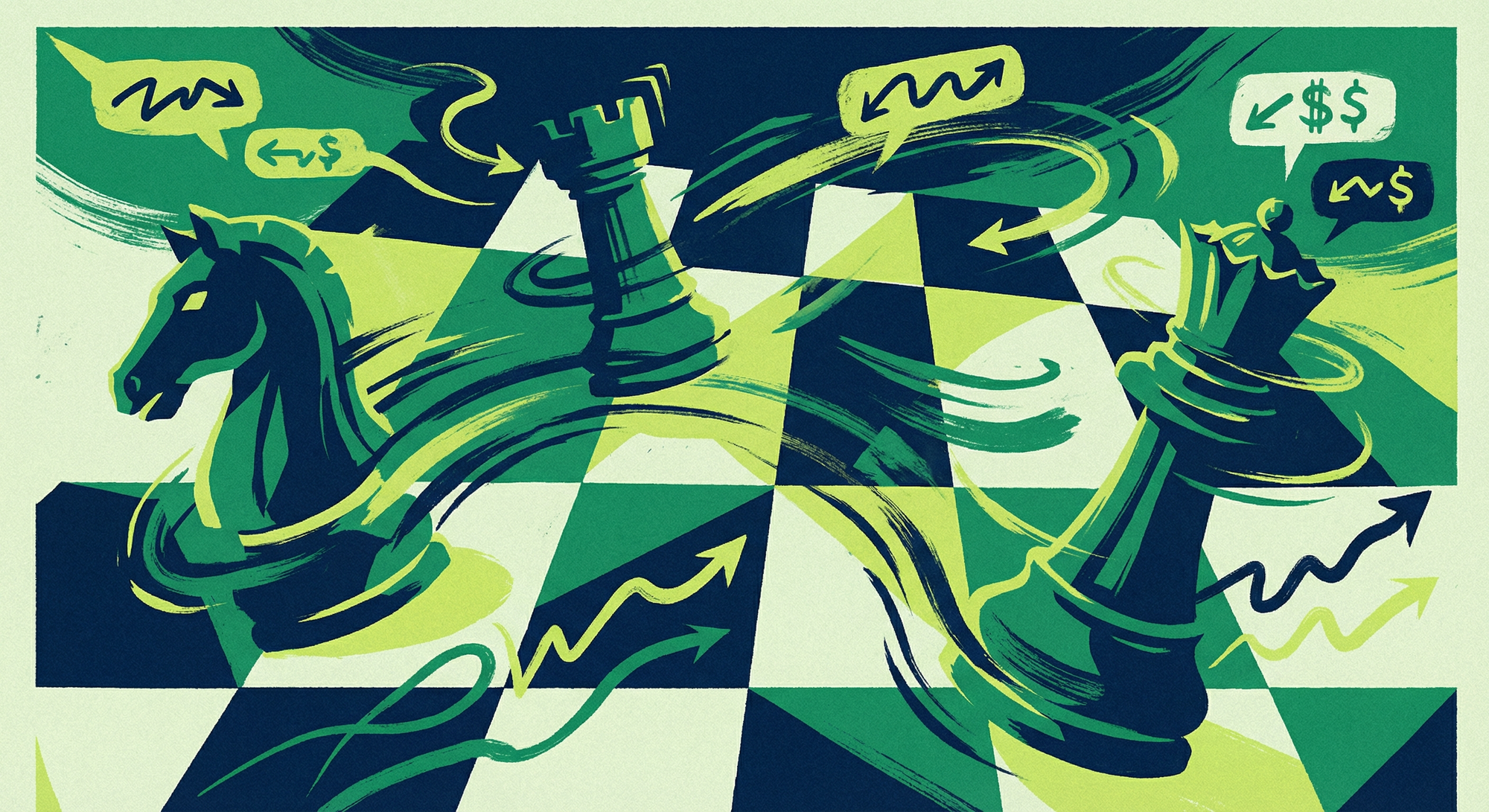
The "Great Account Shuffle" is no longer a spectator sport; it's a strategic chess match played on a rapidly shifting board. The questions that remain are less about who's "winning" and more about how the very definition of a "marketing partner" will evolve. Will the behemoth holding companies successfully adapt their massive structures to this fragmented reality, or will a new wave of agile, specialized independents continue to chip away at their market share, perhaps even forming new, decentralized networks?
Keep a sharp eye on the talent market. The demand for highly specialized skills, coupled with the allure of project-based work, could further accelerate the gig economy within marketing. Agencies will need to rethink retention strategies, offering not just competitive pay but also opportunities for continuous learning and deep specialization. Watch for continued consolidation of niche agencies – holding companies are desperate to acquire highly specialized capabilities they can't build fast enough. And finally, track the evolution of the in-house agency, not as a threat, but as a potential partner for external agencies providing the strategic firepower and innovation they can't cultivate internally. The future of marketing is not about winning accounts, but about delivering undeniable, measurable value in a world that demands precision.
Sources:
* R3 Worldwide: [https://www.r3worldwide.com/](https://www.r3worldwide.com/) (Referencing Q4 2025 global pitch analysis)
* ANA (Association of National Advertisers): [https://www.ana.net/](https://www.ana.net/) (Referencing 2025 In-House Agency Report)
* McKinsey & Company: [https://www.mckinsey.com/](https://www.mckinsey.com/) (Referencing latest report on AI in marketing)
* Insider Intelligence / eMarketer: [https://www.emarketer.com/](https://www.emarketer.com/) (Referencing projections for retail media ad spending)