L'Oréal's VML Bet: The Mega-Agency Moment of Truth in the Creator Economy
L'Oréal, the undisputed behemoth of beauty, just made its latest strategic play in the creator economy, and it's a telling one: doubling down on a centralized mega-agency partnership with WPP's newly consolidated VML. On its face, this looks like a straightforward move to scale influencer initiatives across a sprawling portfolio of 37 global brands, from Lancôme to Maybelline. But beneath the surface, it’s a high-stakes litmus test for the entire agency landscape, questioning whether industrial-scale creative can ever truly capture the ephemeral magic of authentic influence.
This isn't merely another contract signing; it's a direct challenge to the fundamental premise of the creator economy itself. L'Oréal, with its deep pockets and global reach, is betting that VML can integrate and optimize creator relationships, content production, and performance measurement across continents, leveraging its post-merger scale. The unspoken question is whether this pursuit of efficiency will inadvertently dilute the very authenticity and niche relevance that makes the creator channel so potent, or if VML can truly crack the code where others have stumbled.
THE BROADER CONTEXT
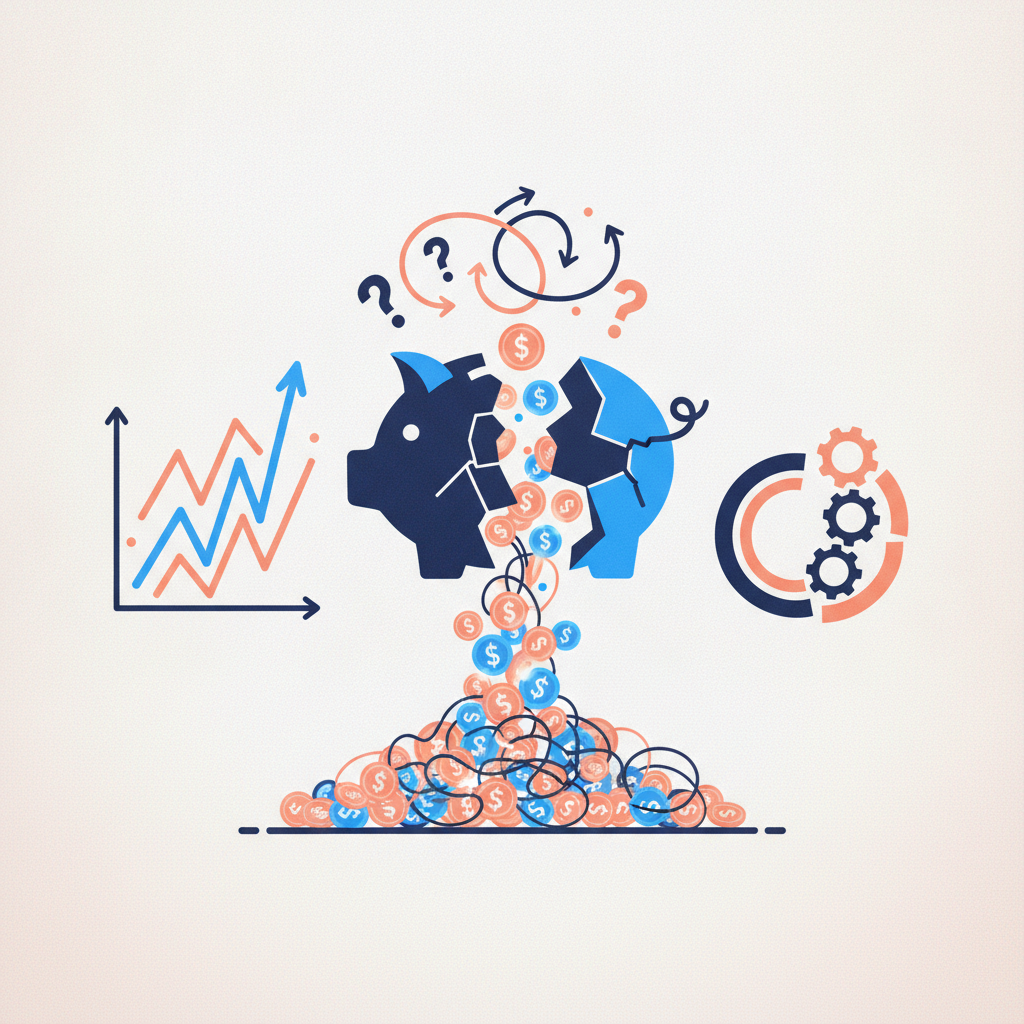
The creator economy, now projected by Goldman Sachs to eclipse $500 billion globally by 2027, continues its relentless expansion, fundamentally reshaping how consumers discover and engage with brands. We’re well past the "influencer marketing is a fad" debate; it's the new mainstream. What's changed, however, is the sophistication and fragmentation. Niche platforms like BeReal (despite its recent pivots to more curated content) and even the nascent but growing Lemon8 are siphoning attention from TikTok's once-undisputed dominance, while platforms like Twitch and YouTube continue to cultivate deeply engaged, albeit smaller, communities. Brands like Liquid Death and Duolingo, known for their audacious, creator-first content strategies, consistently outperform traditional campaigns, demonstrating the direct ROI of genuine resonance.
Yet, despite this undeniable shift, the mega-agency model has struggled to adapt. WPP's VML merger, completed in early 2024, was a direct response to this need for integrated capabilities, aiming to offer brands a seamless, end-to-end solution. The premise was simple: consolidate creative, media, and technology under one roof to streamline client relationships and deliver holistic strategies. However, the creator economy thrives on agility, individual relationships, and a deep understanding of subcultures — attributes historically challenging for large, bureaucratic structures. Publicis's "Power of One" initiative has seen some success in integrating specialist creator units, but even they face the constant tension between centralized control and decentralized authenticity.
The competitive landscape is also evolving rapidly. Many D2C darlings, like Gymshark and Glossier, have built formidable in-house creator teams, bringing talent identification, content strategy, and even some production entirely within their walls. Meanwhile, a burgeoning ecosystem of specialist creator agencies, often hyper-focused on specific platforms (e.g., gaming creators on Twitch, beauty creators on YouTube Shorts), demographics, or performance objectives (e.g., UGC-driven conversion), consistently deliver higher engagement rates and more compelling ROI than their larger counterparts. This fragmentation means L'Oréal isn't just choosing VML; it's consciously not choosing a distributed network of these agile specialists, a decision that carries significant opportunity cost.
Furthermore, the rise of advanced AI tools is dramatically altering content creation and optimization. From AI-powered creator discovery platforms that predict engagement to generative AI assisting with scriptwriting, video editing, and even synthetic voiceovers, the barrier to entry for content production has plummeted. This democratizes content creation but also floods the market, placing an even greater premium on truly unique voices and authentic connections. The challenge for VML is not just managing creators, but leveraging AI to enhance human creativity without making it feel sterile or manufactured, a line many are still struggling to walk.
WHY IT MATTERS
For brands like L'Oréal, this VML bet represents a critical strategic pivot point. On one hand, the sheer scale of L'Oréal's portfolio necessitates a centralized approach to maintain brand consistency, manage legal compliance (especially with evolving FTC and global disclosure regulations), and leverage global media buys. VML's expansive network promises to deliver this efficiency. However, the inherent risk is "creator wash" – the industrialization of influence where individual creators become mere content factories, losing the very authenticity that drives their audience engagement. L'Oréal needs niche relevance for its diverse brands, from high-end luxury to mass-market appeal, and achieving that at scale without homogenizing content is a tightrope walk.
For agencies, particularly the independent players, L'Oréal's move signals a moment of truth. Can mega-agencies like VML truly integrate the agile, relationship-driven world of creators into their existing frameworks, or will this become another example of trying to fit a square peg into a round hole? If VML succeeds, it validates the holding company model's adaptability in the creator space, potentially drawing more large brands away from fragmented specialist agencies. If it falters, it reinforces the competitive advantage of independent, nimble shops that are built from the ground up to understand and navigate the creator ecosystem. The stakes are clear: this is a real-world test of whether scale can finally meet soul in modern marketing.
The broader marketing ecosystem will also feel the ripple effects. This partnership accelerates the blurring of lines between traditional media buying, creative development, and talent management. VML isn't just "finding influencers"; they're being tasked with end-to-end campaign ownership, from strategy to content production to performance optimization. This puts immense pressure on traditional media agencies to prove their value beyond programmatic buys and on creative agencies to demonstrate their understanding of native platform content. We'll also see further acceleration towards performance-based creator deals, where brands demand direct attribution and guaranteed ROI, moving away from vanity metrics like follower counts. This shift forces everyone in the ecosystem to become more accountable and data-driven.
THE AGENCY ANGLE
Independent agency leaders, this L'Oréal-VML partnership isn't a threat; it's a tactical blueprint for differentiation. Here's what you should be doing right now:
1. Hyper-Niche Specialization, Not Generalization: You cannot out-VML VML on scale. Don't try. Instead, double down on a specific niche where you can be the undisputed expert. This could be a specific platform (e.g., long-form educational creators on YouTube, short-form conversion on TikTok Shop), a demographic (e.g., Gen Z beauty enthusiasts, affluent Gen X hobbyists), a content type (e.g., interactive live streams, AI-generated personalized content), or a performance objective (e.g., driving app downloads, direct e-commerce sales via shoppable content). L'Oréal is looking for breadth; you should offer unparalleled depth in your chosen lane. Demonstrate superior insight into your niche's evolving trends, creator dynamics, and unique performance levers.
2. Master Performance Metrics Beyond Vanity: While VML will be selling "integrated solutions," you need to sell demonstrable, attributable ROI. Move beyond follower counts and likes. Implement robust attribution models that link creator activity directly to sales, lead generation, customer lifetime value (LTV), and measurable brand lift. Leverage first-party data, UTM tracking, unique discount codes, and sophisticated pixel implementation. Show your clients how creator content impacts their bottom line in ways that traditional media cannot. This means investing in analytics capabilities and being able to speak the language of finance, not just creative.
3. Build a Proprietary Tech Stack (or Partner Smartly): The creator economy is increasingly tech-driven. While VML will likely rely on WPP's internal tech and major platforms, you can gain an edge by building or integrating bespoke AI solutions for creator identification, trend forecasting, content optimization (e.g., A/B testing creative variations, predicting viral potential), and automated reporting. Don't just use CreatorIQ; integrate its data with your own predictive models. Explore generative AI tools to rapidly prototype content ideas or personalize creator outreach at scale, freeing up your team for high-value strategic work and relationship building. The goal is to augment your human expertise, not replace it.
4. Cultivate Deep, Ethical Creator Relationships & Legal Expertise: The mega-agency approach often risks transactionalizing creator relationships. Your advantage is your ability to foster genuine, long-term partnerships. Understand creators' needs, their audience, and their career aspirations. Become a trusted advisor, not just a client brief passer. Simultaneously, invest in robust legal expertise around evolving creator economy regulations, including FTC disclosure guidelines, data privacy laws (e.g., CCPA, GDPR extensions), IP rights for AI-generated content, and usage rights for global campaigns. Proactively guide clients through this complex landscape, positioning your agency as a safe, ethical, and knowledgeable partner in a rapidly changing environment.
THE STATE OF PLAY
The L'Oréal-VML partnership is less a definitive answer and more a massive, ongoing experiment. Can VML, with its newly merged scale, truly deliver the agility, authenticity, and performance that the creator economy demands across a portfolio as vast and varied as L'Oréal's? Or will the inherent friction of a centralized, large-scale operation inevitably dilute the magic, leaving an opening for the nimble specialists who understand the nuances of niche influence? The jury is out, but the next 6-12 months will provide critical data points.
We'll be watching closely for L'Oréal's reported ROI from these initiatives, particularly across different brand tiers and geographic markets. Are they seeing a sustained uplift in engagement and sales, or are they falling back on "awareness" metrics? Equally important will be the evolution of creator platforms themselves. Will TikTok, YouTube, and the emerging contenders build more robust native brand tools, further disintermediating agencies? How will regulatory bodies worldwide continue to tighten guidelines around disclosure and AI-generated content, forcing a higher standard of transparency from all players? The enduring question remains: can "big" ever truly be "authentic" in a space built on individual trust and connection, or is L'Oréal's bet a testament to the irresistible, if sometimes elusive, allure of scale?
Sources:
* Goldman Sachs, "The Creator Economy: Size, Scope, and Growth Projections," November 2023.
* Influencer Marketing Hub, "Influencer Marketing Benchmark Report 2025," January 2025.
* eMarketer, "Global Social Media Ad Spending Forecast 2024-2027," October 2024.
* WPP Investor Relations, "VML Merger Announcement and Strategic Rationale," October 2023.
* L'Oréal Annual Report, 2025.
* FTC.gov, "Disclosures 101 for Social Media Influencers," Updated 2024.
* CreatorIQ, "State of the Creator Economy Report," Q4 2025.